
Top 10 Tips For Choosing The Most Suitable Ai Platform For Trading Stocks, From Penny To copyright
It’s crucial to your success to select the most effective AI trading platform regardless of whether it’s for penny stocks or copyright. Here are 10 important tips to help you choose the best one:
1. Determine Your Trading Goals
Tips – Determine the primary focus of your investment such as coins, penny stocks or both – and specify whether you wish to automate or invest in short-term, long-term or algorithmic trades.
Why the different platforms are so successful in different areas. Being clear about your objectives lets you choose the best platform to meet your needs.
2. Evaluation of Predictive Accuracy
Tips: Make sure to check the platform’s track record in providing accurate forecasts.
How to determine reliability: Look up backtests published and user reviews.
3. Be on the lookout for Real-Time Data Integration
Tips: Make sure that your platform is compatible with real-time data feeds for markets. This is crucial for fast moving assets such as penny stock and copyright.
Why: Delayed data can lead to missed opportunities or poor trade execution.
4. Customizability
Tips: Choose platforms that let you customize parameters, indicators and strategies to suit your trading style.
Examples: Platforms such as QuantConnect or Alpaca provide extensive customisation options for tech-savvy customers.
5. The focus is on automation features
Tip: Look out for AI platforms that have powerful automatization capabilities such as stop-loss feature along with take-profit and trailing stops.
Automating saves time and helps execute trades in a precise manner, especially in volatile markets.
6. Evaluate Sentiment Analysis Tools
TIP: Pick platforms that offer AI-driven sentiment analysis, particularly for copyright and penny stocks, which can be in turn influenced by news and other social media.
The reason: Market sentiment could be a key driver of the short-term price fluctuations.
7. Prioritize user-friendliness
Tip – Make sure you’re using a platform that offers an intuitive interface and clearly written documentation.
A steep learning curve can make it difficult to trade efficiently.
8. Verify Compliance with the Regulations
Verify that the platform adheres to the regulations for trading in your area.
copyright Check for features that support KYC/AML.
For penny Stocks: Ensure adherence to SEC or similar guidelines.
9. Cost Structure:
Tip: Understand the platform’s pricing–subscription fees, commissions, or hidden costs.
Why? A expensive trading platform could reduce profits if you are doing smaller trades with penny stocks or copyright.
10. Test via Demo Accounts
Tips: Use demo accounts, or trial versions to experience the platform without risking real cash.
The reason: A test session can show whether the platform is up to your expectations for functionality and performance.
Bonus: Make sure to check out the Community and Customer Support
Tips: Find platforms with robust support and active communities of users.
The reason: Peer support can be a great way to troubleshoot and refine strategies.
If you take your time evaluating the platforms on these parameters You’ll be able to find the one that aligns most closely with your style of trading, whether you’re trading penny stocks, copyright or both. Read the top inciteai.com ai stocks for more advice including best ai stocks, copyright ai, ai for investing, ai day trading, best ai stock trading bot free, ai for trading stocks, ai stock trading, ai for investing, ai for trading stocks, ai investment platform and more.
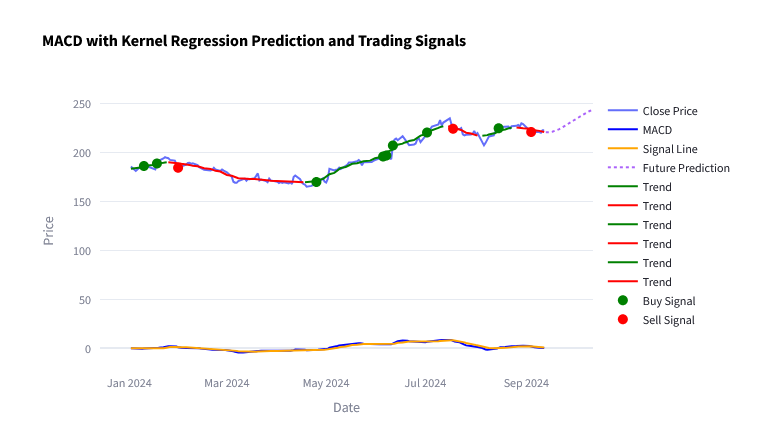
Top 10 Tips To Combine Ai With Fundamental Analysis To Help Stock Pickers, Predictions And Investments
Combining AI analysis and fundamental analysis enhances the accuracy and effectiveness of stock pickers. The combined approach can be utilized to make investment choices. Here are 10 strategies for integrating AI into fundamental analysis to help you make better predictions about stocks.
1. AI Data Gathering and Processing
Tips: Use AI to streamline the gathering as well as the analysis, cleaning and processing of essential data, such as financial statements, earnings reports, and economic indicators.
Why: AI can quickly sift through large volumes of data and find patterns or other key metrics, saving time and ensuring no critical information is overlooked.
2. Incorporate Key Financial Ratios into AI Models
Tip Tips: Feed AI algorithms with essential metrics like P/E ratio, P/B ratio ROE, debt-to-equity ratio, and free cash flow.
What is the reason: These are the ratios used to determine the value of a company’s assets and its financial health. AI can process this data more effectively. AI can recognize patterns that humans may not notice.
3. Combine AI’s Predictive Power with Fundamental Data
Tips: Make use of AI for enhancing predictions based on traditional fundamental analyses, such as forecasting price movements of stocks using historical performance data or forward-looking fundamental metrics.
Why: AI-based models can contain more complicated variations and patterns than conventional models. These models increase the accuracy of predictions grounded in fundamental analysis.
4. Automated Earnings Models and Valuation Methodologies
Tip: By incorporating recent and historical information, AI can be used to automate and improve estimates of earnings, as well as valuations models (such discounted cash flow models).
Why? AI is able to adjust models quickly when new data is available, allowing for more accurate predictions and stock value in real-time.
5. Integrate Macroeconomics and Business Fundamentals
Tips: Make use of AI to connect macroeconomic data (interest rates and inflation) with microlevel fundamental data (company earnings or management quality). ).
The reason: AI helps to predict stock performance by understanding external influences.
6. Natural Language Processing for News and Earnings Reports
Utilize NLP to integrate unstructured data such as social media, news articles, earnings calls transcripts or other sources to enrich your company’s data.
Why? NLP enables AI by extracting sentiment and insights in qualitative data. This information is then added to the fundamental metrics.
7. Combine AI’s Real Time Processing with Long-Term Analysis
Tips: Make use of AI for real-time data tracking and analysis, while fundamental analysis is used to guide your long-term investments.
What’s the reason? AI offers quick response to changes in market conditions, whereas the fundamental analysis gives a long-term outlook, creating an investment plan that’s balanced.
8. AI-Enhanced Basic Screening: Find opportunities that aren’t obvious
Tip: Create AI models to automatically filter for overvalued and undervalued stocks using a mix of fundamental indicators and market behavior.
Why: AI can reveal hidden investment opportunities through the detection of patterns in the markets that are not visible with traditional fundamental analysis methods.
9. AI Insights for Risk Management: Fine-tune Risk Management
Tips: Make use of AI to improve risk management by assessing a company’s financial stability and predicting potential risks like liquidity issues or regulatory changes, based upon its foundational data.
Why: AI can assess risks dynamically and adapt positions, helping to protect your portfolio from downside risks while also leveraging fundamental value opportunities.
10. Always review your models regularly with new data
Tip: Continuously feed updated financial reports, earnings information, as well as macroeconomic indicators to your AI system to improve predictions and modify stock picks according to the changes.
The reason is because financial data and market conditions change constantly, it is important to keep your models up-to-date with the most current information. This will help you make accurate stock picks.
Bonus: Use AI to Automate Portfolio Rebalancing
Tips. Use AI to monitor the performance of your portfolio. You can adjust your portfolio when you notice changes in your investment basic principles.
Why: AI can automate portfolio rebalancing using fundamental triggers. This allows for optimum allocation of assets, without the need for constant manual intervention.
Combining AI alongside fundamental analyses could assist you in taking a data-driven, robust method of stock and investment selection. AI improves the capacity to process massive amounts of data, identify patterns, and adapt quickly to new information, while fundamental analysis can provide a solid base for long-term investment decisions. This combination approach allows you to make more informed, efficient, and timely investment choices. Follow the top rated inciteai.com ai stocks for more recommendations including ai stock, copyright ai bot, trading chart ai, ai stock price prediction, ai for trading, best copyright prediction site, ai sports betting, ai stocks to invest in, trading ai, trading chart ai and more.
